Bill of Lading Generic: Your Guide to Error-Free Forms
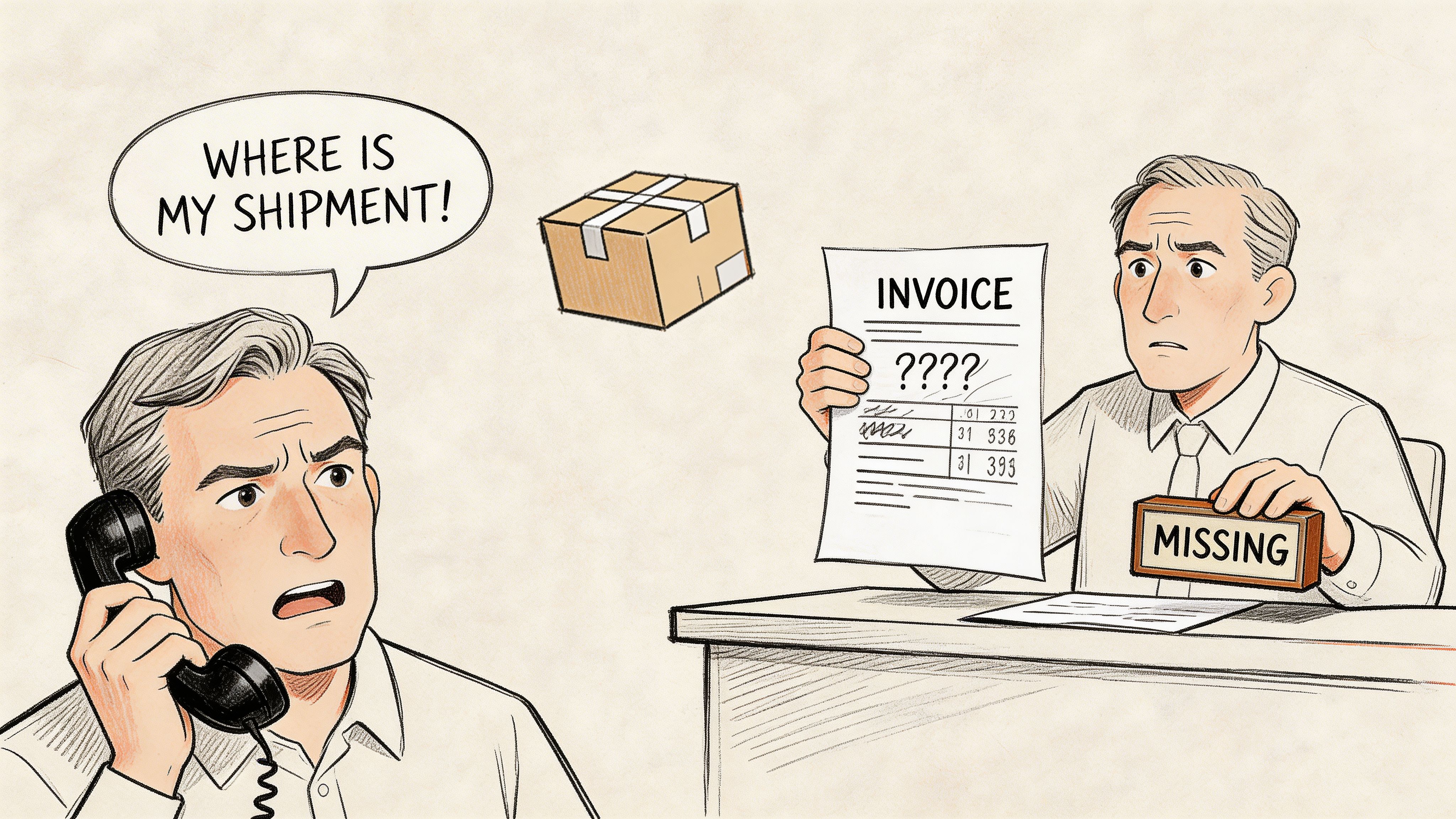
A truck has already left the dock. The customer says the shipment hasn’t arrived. Your finance team has an invoice they can’t match to the freight details. The warehouse insists everything went out correctly. The carrier says they need the paperwork before they can investigate.
This is the moment when people discover whether their shipping documents are helping them or hurting them.
The bill of lading is often treated as routine paperwork. In practice, it’s the one document that ties the shipment together. It tells you who shipped the goods, who should receive them, what moved, how much moved, and under what terms the carrier accepted it. When that document is clear, problems get solved faster. When it’s vague, missing, or inconsistent, every department starts guessing.
That’s why a bill of lading generic form matters. A generic form gives you a repeatable structure your team can use across shipments, carriers, and locations. It creates one shared record for operations, customer service, accounting, and procurement.
If you also track shipment status through EDI feeds, a practical companion is Mastering EDI Express Tracking, because status visibility only works well when the underlying shipment record is right in the first place.
The goal isn’t to memorize legal language. It’s to understand what the form does, how to fill it out correctly, where teams make costly mistakes, and how to move from manual entry to cleaner digital workflows.
Introduction
If you’re searching for a bill of lading generic form, you’re probably in one of two situations.
Either you need a template quickly, or you’re trying to fix a process that keeps producing shipping confusion.
Both are common. A shipment gets delayed, the receiving team says the counts don’t match, and accounting can’t tell whether the carrier billed the right amount. Everyone asks for the same document because everyone knows it should have the answer.
That document is the Bill of Lading, often shortened to BOL or B/L.
Think of it as the shipment’s single source of truth. It travels with the freight process even when the physical goods are moving between different hands. Warehouse staff use it to prepare freight. Carriers use it to accept and transport freight. Receivers use it to confirm what arrived. Finance teams use it to reconcile charges and support disputes.
Practical rule: If the bill of lading is sloppy, every downstream task gets harder.
A lot of confusion comes from the fact that the BOL does three jobs at once. It isn’t just a shipping label. It isn’t just a receipt. It also has contract and ownership implications, depending on the type being used.
That’s why a generic form needs more than blank boxes. Your team needs to know what each field means, why it matters, and what happens when someone enters the wrong detail.
A good process starts with a simple question: if a shipment goes wrong, would this form let a new person understand what happened without asking five coworkers?
If the answer is no, the form needs work.
What Is a Bill of Lading and Why Does It Matter
A bill of lading is the birth certificate for your cargo. Once the carrier accepts the shipment, this document becomes the official record of what entered the transport chain.
That sounds formal, but the idea is simple. If goods move from one place to another, someone needs a document that states the basics clearly and consistently.
The three jobs a BOL performs
A bill of lading matters because it usually serves three roles at once.
| Role | What it means in plain English | Practical example |
|---|---|---|
| Receipt | The carrier confirms it received the goods | A carrier picks up 4 pallets from your dock and signs for them |
| Contract of carriage | It records the transport arrangement | The document shows who is moving the freight and where it’s going |
| Document of title | In some cases, it helps establish who can claim the goods | A party holding the proper document can direct or claim the shipment |
If you’re new to shipping, the third point often causes the most confusion. Not every BOL works the same way in practice, which is why the type of bill matters. But the broad idea is that the document can affect control over the goods, not just the description of them.
Why this document became so important
The bill of lading didn’t appear because someone wanted more paperwork. It grew out of trade itself.
The bill of lading originated in the 11th century during expanding Mediterranean trade and evolved from informal ship registers into a major legal document. By the late 18th century, the 1787 English case Lickbarrow v. Mason established it as a negotiable instrument of title. Today, bills of lading support international trade worth trillions and serve as receipt, carriage contract, and title document, as described in this history of the bill of lading at lawexplores.com.
That long history matters for one reason. The form isn’t busywork. It exists because trade breaks down when people can’t prove what was shipped, accepted, and transferred.
Why operations, finance, and procurement all care
Operations teams need the BOL to dispatch freight correctly.
Accounting needs it because the details on the BOL often help explain freight invoices, accessorial charges, and shipment disputes.
Procurement teams use it to compare what vendors said they shipped against what moved.
If you handle freight documents regularly, a practical example of where structured extraction fits into logistics workflows is this page on logistics document use cases.
A good BOL doesn’t just help the carrier move freight. It helps every internal team agree on the same facts.
When people ask why the bill of lading generic form matters, that’s the answer. It reduces ambiguity. In logistics, ambiguity is expensive.
Understanding the Different Types of Bills of Lading
Not all bills of lading give the same level of control over the goods. As a result, many teams get tripped up.
A form can look familiar and still carry very different practical consequences.
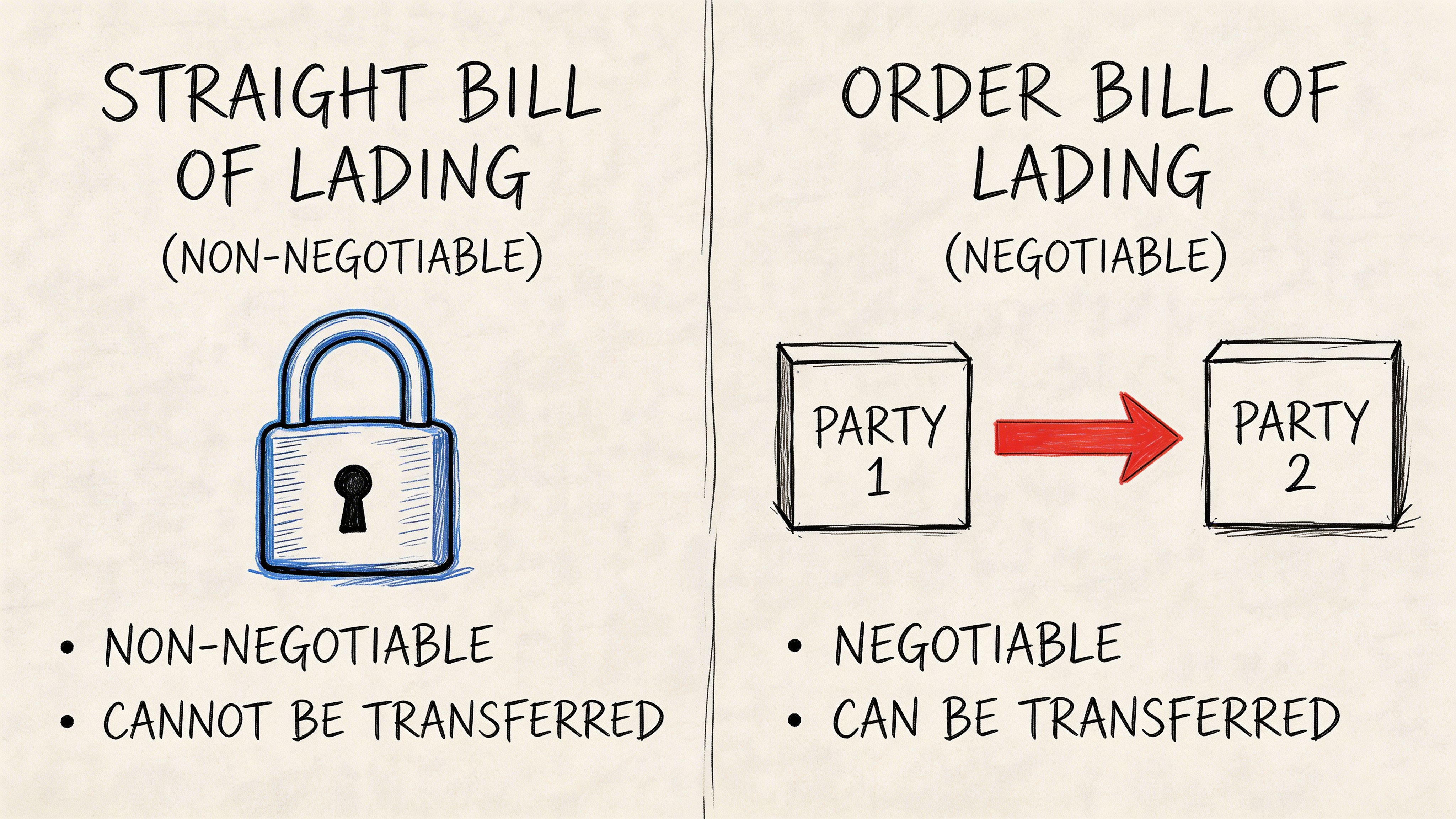
Straight bill of lading
A straight bill of lading cannot be transferred or endorsed.
That means the shipment is consigned to a specific party. In plain language, it works like a package addressed to one named recipient. The carrier is delivering to that party, not to whoever happens to hold the document.
This type is common when the seller and buyer know exactly who should receive the goods.
Use it when:
- The consignee is fixed: The shipment is going to one named customer or location.
- Ownership transfer isn’t meant to move during transit: Nobody expects to endorse the document to another party.
- The process needs simplicity: Operations teams want straightforward delivery instructions.
Order bill of lading
An order bill of lading is bearer or endorsable.
This is the one that often feels more commercial than operational. It can be transferred, usually by endorsement, which means control over the goods can move from one party to another while the shipment is in transit.
Think of it less like a parcel label and more like a document tied to the right to claim goods under the stated terms.
Why finance teams care: this type can affect payment flow, document control, and release conditions.
Combined or multimodal bill of lading
A combined multi-modal bill of lading covers shipments that move across more than one transport leg or mode.
The source material notes that combined multi-modal bills are used in 70% of container shipments per industry norms, and it also notes that post-20th century conventions such as Hague-Visby standardized liability, including limits of 2 SDR/kg or 666.67 SDR/package for shortages, as described in the cited paper at aaronflaaen.com.
In practical terms, this form is useful when the shipment doesn’t follow a simple one-carrier, one-leg route.
A manufacturer might ship goods from a factory by truck to a port, by ocean carrier overseas, then by another inland leg. A combined document helps keep the chain together.
Clean and claused bills
You’ll also hear people talk about clean and claused bills of lading.
A clean BOL means no visible damage or shortage was noted when the carrier accepted the goods.
A claused BOL includes notes about issues such as damaged packaging, missing cartons, or other exceptions. This distinction matters because if damage exists at handoff and nobody writes it down, the paperwork may later suggest the goods were tendered in better condition than they were.
If the shipment has visible problems at pickup or delivery, write the exception on the document. Memory is not evidence.
For a quick visual explanation of these differences, this short video is useful:
A simple decision lens
When you look at any BOL type, ask one practical question: who has the right to claim the goods?
That question usually clears up the confusion faster than legal terminology does.
The Anatomy of a Generic Bill of Lading Form
A generic bill of lading form only works if the fields are complete and unambiguous.
The form might look simple. It isn’t. Each box affects how the carrier prices the load, how the receiver verifies it, and how your team resolves disputes later.
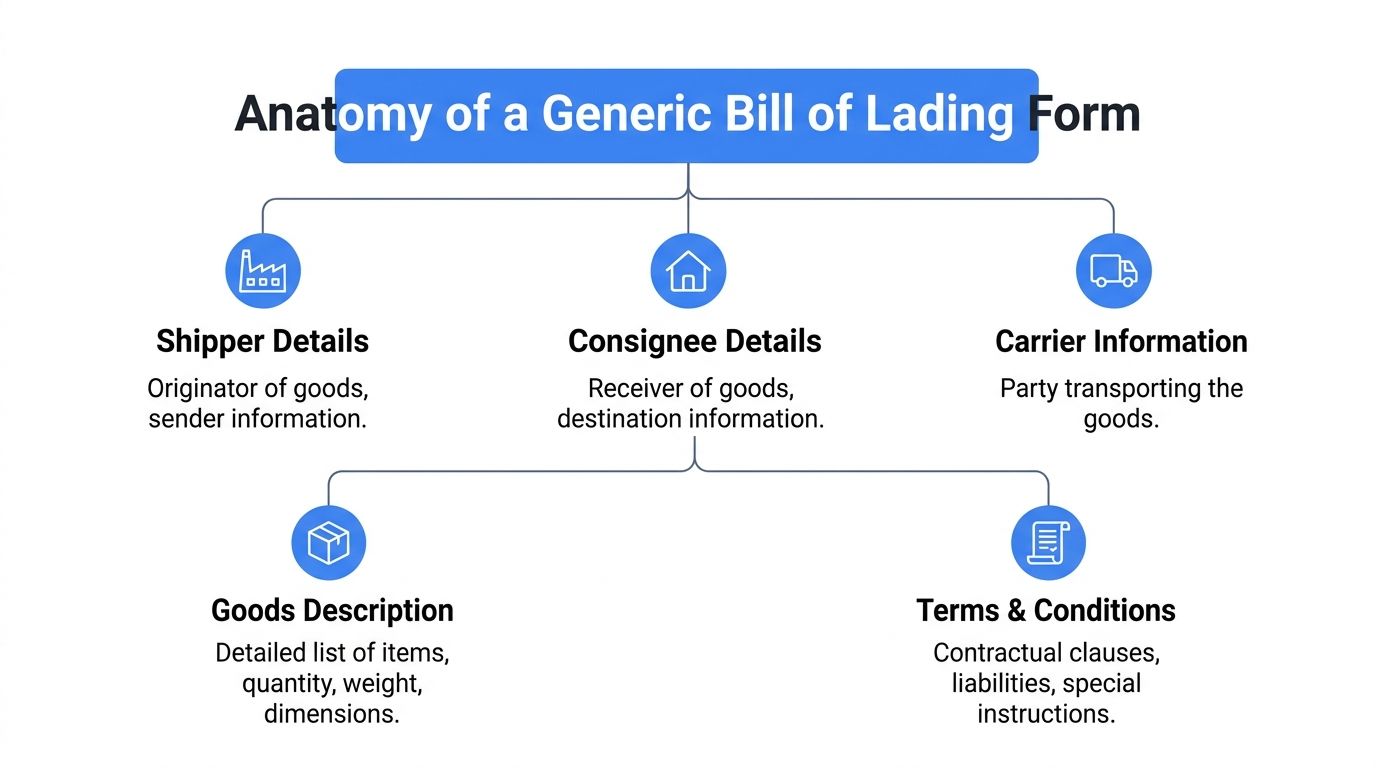
The Federal Code of Regulations requires key data points on U.S. domestic interstate freight BOLs, including consignor and consignee names, origin and destination, package count, freight description, and weight or volume measurements. Those fields directly affect freight class rating and carrier pricing, as summarized in this bill of lading reference at eforms.com.
The mandatory fields
These are the fields you should treat as essential.
| Field | What goes here | Why it matters |
|---|---|---|
| Shipper name and address | Full legal sender details | Tells the carrier where the freight originated and who tendered it |
| Consignee name and address | Full legal receiving party details | Prevents delivery confusion and supports proof of intended destination |
| Origin and destination | Pickup and delivery locations | Drives routing and carrier handling |
| Package count | Number of pallets, cartons, crates, or other units | Supports space planning and receiving verification |
| Description of goods | Clear commodity description | Helps classify freight and align handling needs |
| Weight or volume | Shipment measurements | Affects rating, planning, and audit checks |
Why each mandatory field needs precision
Shipper and consignee details Use full names, not shortcuts your internal team understands but nobody else does. “ABC East” may mean something to your warehouse. It may mean nothing to a receiving terminal or auditor.
Origin and destination This seems obvious until teams rely on copied records. One old address can send a shipment down the wrong path, especially when companies have multiple facilities.
Package count Don’t just write “100 boxes” if the carrier is picking up four wrapped pallets that contain those boxes. The handling unit matters operationally. The inner count matters for reconciliation.
Goods description This field is where many avoidable disputes begin. “Parts” is weak. “Metal brackets on 4 pallets” is better. A useful description gives a carrier and receiver a realistic picture of what’s moving.
Weight and volume These aren’t bookkeeping details. They influence rate calculations, freight class decisions, and space allocation.
The fields that are often optional but still useful
A generic template should also leave room for fields that aren’t always mandatory but often save time later.
- Purchase order number: Helps accounting and receiving match freight to internal transactions.
- Reference number: Useful for customer service, shipment tracing, and dispute handling.
- Special instructions: Notes handling requirements, delivery restrictions, or appointment needs.
- Freight class or NMFC information: Supports rating and reduces reclassification friction.
- Declared value or related terms: Can matter in claims discussions depending on the shipment context.
- Signature lines: Record who tendered, accepted, and received the goods.
A practical template mindset
When you download or build a bill of lading generic template, make sure it supports two audiences at once.
The first audience is the person filling it out at the dock. The second is the person reading it later with no context.
Dock-floor test: If a receiver, carrier rep, or accountant can’t understand the form quickly, the form isn’t finished yet.
A sample way to structure line details
Instead of vague entries, use a format like this:
- Handling units: 4 pallets
- Contents: 100 cartons of replacement filters
- Weight: Enter the measured shipment weight
- Special handling: Note any stacking limits, damage concerns, or delivery constraints
That format gives operations, billing, and receiving more to work with than a one-line commodity label ever will.
How to Fill Out Your Bill of Lading Correctly
A clean form starts before anyone types into it.
The person completing the BOL needs the packing details, shipment measurements, addresses, purchase order references, and any handling notes in front of them. If your team fills out the form while hunting through emails, errors will slip in.
Start with the parties and locations
Write the full legal shipper name and the full legal consignee name first.
Then verify the pickup and delivery addresses against the order, not against memory. Warehouses often reuse old templates. That’s how shipments inherit outdated consignee data.
A simple habit helps. Read the destination out loud before the carrier arrives. If it sounds unfamiliar, stop and verify it.
Describe the freight the way a stranger would need it
The goods description should be specific enough that a carrier, receiver, and billing clerk all understand what’s moving.
Bad entry: “equipment” Better entry: “2 pallets of packaged industrial pumps” Better still: include package form and commodity in one line, then add any handling notes if needed.
When you list counts, separate handling units from inner contents. “4 pallets containing 100 boxes” is more useful than either number alone.
Check the measurements before release
Weight and dimensions should come from the shipment, not from an old estimate copied forward.
If the freight profile changes, the BOL should change with it. A shipment that grows from a few cartons into a palletized load is not the same shipment for rating and handling purposes.
Add the details people forget until there’s a problem
Some fields look secondary until something goes wrong.
- PO or reference numbers: These help accounting and customer service tie freight to the right transaction.
- Special instructions: Use this for delivery appointments, limited access sites, or handling needs.
- Hazard communication: If special regulatory details apply, don’t bury them in the middle of a vague description.
- Signatures and dates: Incomplete signatures weaken the handoff record.
Use a final review checklist
Before the driver leaves, review the form in this order:
| Check | What to confirm |
|---|---|
| Names | Shipper and consignee are complete and correct |
| Addresses | Pickup and delivery locations match the order |
| Counts | Pallets, cartons, or crates match the physical freight |
| Description | Commodity description is specific and readable |
| Measurements | Weight and other listed measures reflect the shipment |
| Instructions | Any special notes are clearly visible |
| Sign-off | Required signatures and dates are present |
Write the BOL for the problem you hope never happens. That’s when the document has to carry the story on its own.
Teams that do this consistently don’t eliminate every issue. They do eliminate a lot of preventable confusion.
Common Bill of Lading Mistakes and Their Hidden Costs
The most common assumption about BOL problems is that they’re minor admin errors.
They aren’t minor when they trigger rebilling, delays, claims friction, or receiving disputes.
Industry data cited by Smartsheet says 40% to 60% of shipping documents contain errors or incomplete data due to manual entry, often leading to reclassification charges and delays. The same source says 72% of SMEs report 2 to 5 hours weekly lost to BoL data reconciliation in 2025 surveys, according to the bill of lading template analysis at smartsheet.com.
Mistake one: vague freight descriptions
“Parts,” “materials,” and “equipment” don’t tell the next person enough.
A weak description creates confusion in rating, handling, receiving, and claims review. If the carrier can’t tell what kind of freight they accepted, your team has less support when questions come later.
Mistake two: wrong counts or mismatched units
A common warehouse problem is mixing up handling units and inner units.
If the dock loads 4 pallets but the BOL says 100 boxes with no pallet count, the receiver may confirm one part of the story while the carrier uses another. That mismatch creates avoidable noise in claims and billing.
Mistake three: copied weights from old records
This happens more than people admit. Someone uses last month’s shipment as a starting point, changes the consignee, and forgets the load is different.
The result can be rebilling, freight class questions, and downstream invoice review work.
Mistake four: unreadable scans and handwriting
Manual forms often fall apart after the shipment leaves.
A warehouse might understand the handwritten original. The accounting team reviewing a fuzzy scan later won’t. If the form is multi-page and one page is missing, even basic shipment facts become harder to verify.
Mistake five: missing exceptions on damaged freight
If goods or packaging show visible issues and nobody writes that exception on the form, the paperwork may look cleaner than reality.
That can weaken later conversations about when the damage occurred and who had custody at the time.
Reality check: Most BOL errors don’t stay in the shipping department. They spread into accounting, customer service, claims, and vendor management.
The hidden cost isn’t just money
The visible cost might be a charge dispute or delayed payment. The less visible cost is repeated rework.
One person corrects the form. Another updates the TMS. A third person emails the carrier. Accounting holds the invoice. Customer service contacts the customer. Procurement asks whether the carrier made a mistake or the vendor did.
A weak BOL forces multiple departments to spend time reconstructing facts that should have been captured once.
Why generic templates don’t solve this by themselves
A bill of lading generic template is useful, but a template alone won’t stop bad inputs.
If teams enter vague descriptions, skip validation, or rely on poor scans, the form still causes trouble. The primary goal isn’t just having a template. It’s building a process where the right information gets captured cleanly the first time and remains readable afterward.
Automate Bill of Lading Data Extraction with DocParseMagic
Once a team sees how many BOL problems come from manual entry and messy records, the next question is practical.
How do you get structured shipment data out of PDFs, scans, and photos without having someone retype everything?
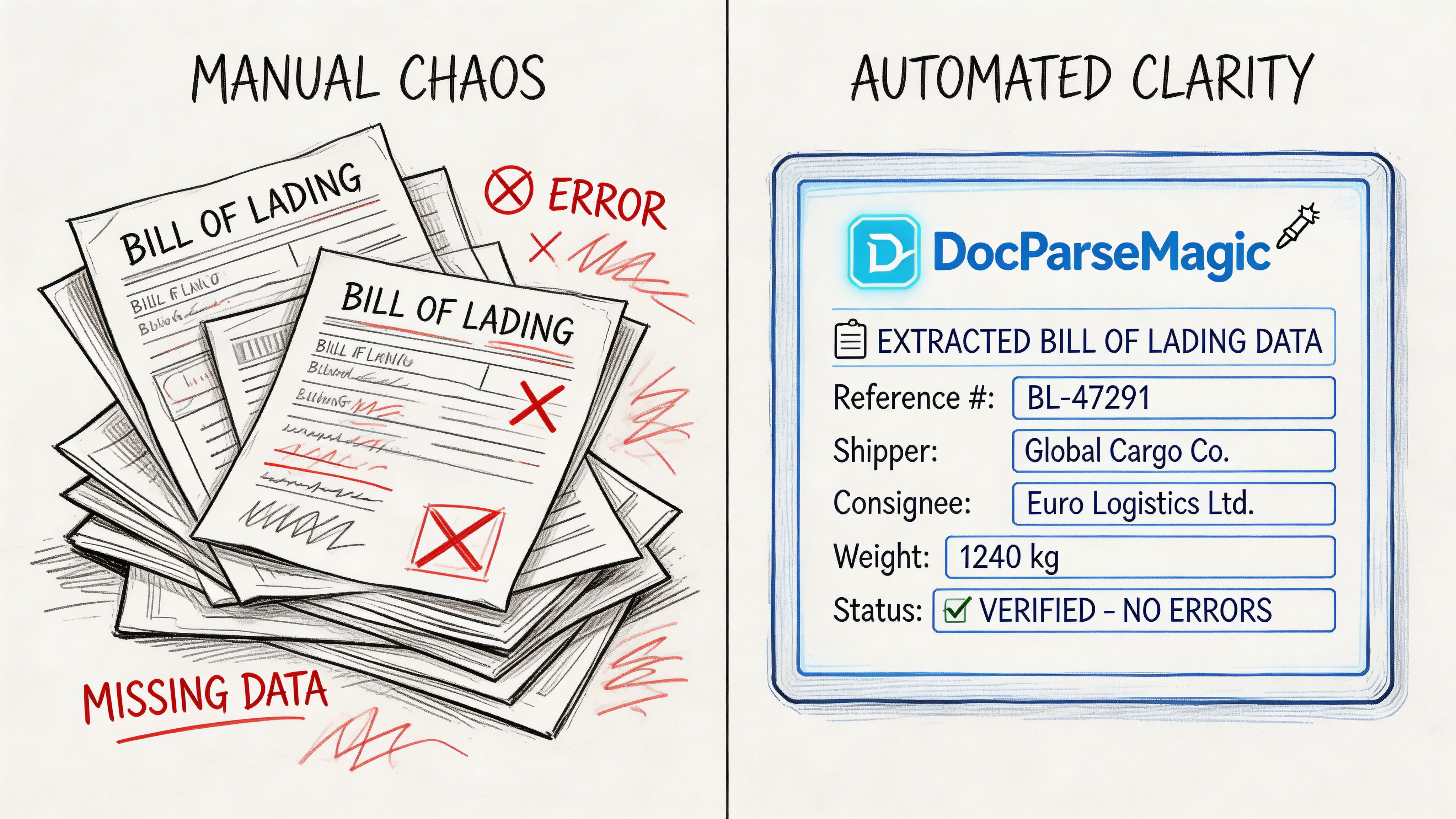
What automation changes
Document automation doesn’t replace the need for a correct BOL. It changes what happens after the document exists.
Instead of leaving shipment details trapped in image files or inconsistent PDFs, an automated extraction workflow pulls key fields into structured tables. That means your team can work with the data, not just look at the document.
Useful fields often include:
- Shipper and consignee details
- Shipment dates
- Reference or PO numbers
- Cargo descriptions
- Line items and shipment notes
- Carrier terms captured in the document
That matters because each department needs a different view of the same record. Accounting wants references for reconciliation. Procurement wants comparable shipment records across vendors. Operations wants a searchable archive instead of a folder full of scans.
Where a no-code parser fits
A no-code parsing tool is useful when your team receives BOLs in mixed formats from many carriers and locations.
One option is DocParseMagic, which can read business documents such as PDFs, scans, and photos and extract structured fields into spreadsheet-ready output. If you want a broader view of how this kind of workflow works beyond shipping forms, this overview of automated data extraction is a good reference.
The practical value is straightforward. Instead of copying shipment details from a BOL into another system by hand, the team reviews extracted fields, checks exceptions, and moves on.
What to look for in any tool
If you’re evaluating software for BOL workflows, focus on a short list.
| Requirement | Why it matters |
|---|---|
| Works with scans and PDFs | BOLs rarely arrive in one neat format |
| Captures line-level details | Shipment summaries alone aren’t enough for review |
| Exports clean tables | Data needs to move into accounting and ops workflows |
| Handles inconsistent layouts | Carriers and branches don’t all use the same design |
| Supports audit review | Teams need to verify extracted values against the original |
Automation won’t fix a bad shipping process by itself. It does remove a lot of repetitive keying, file hunting, and spreadsheet cleanup.
That’s usually where teams start seeing the workflow improve.
From Paper Trails to Integrated Data
A bill of lading generic form looks ordinary until something goes wrong. Then it becomes the document everyone needs.
It has a long history because trade needs a reliable record of who shipped what, where it was going, and under what terms it moved. On the ground, that means the BOL supports shipping, receiving, invoice review, claims handling, and vendor accountability.
The hard part isn’t finding a template. It’s maintaining a process that keeps the form accurate, readable, and useful after the shipment leaves the dock.
Manual paperwork still has a place, but manual retyping and document chasing don’t need to be part of the job. Teams can keep the legal and operational purpose of the BOL while moving the data side into a cleaner workflow.
If your work also involves structured responses, vendor submissions, or formal procurement documents, guides like AI bid writing strategies can be helpful for thinking about how teams turn complex documents into consistent outputs. The same principle applies here. Good structure reduces rework.
A practical next step is to move paper records into searchable digital files, then extract the fields your team uses. This guide on how to digitize paper documents is a useful place to start.
If you’re handling bills of lading, invoices, scanned shipping records, or other document-heavy workflows, DocParseMagic gives your team a way to turn messy files into clean, analysis-ready data without template setup or manual copy-paste.